
How AI Object Removal Works: Deep Dive Into Neural Inpainting & Fast Fourier Convolutions
एआई ऑब्जेक्ट रिमूवल तकनीक कैसे काम करती है? जानिए इनपेंटिंग का विज्ञान
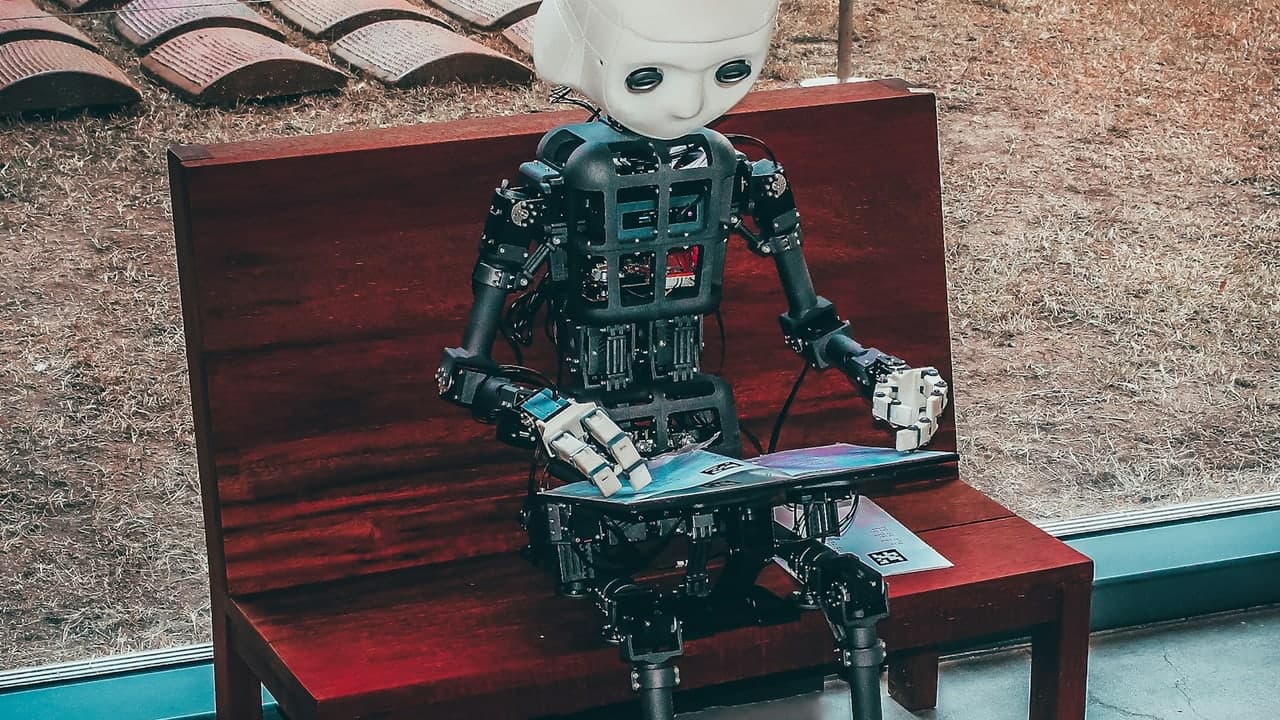
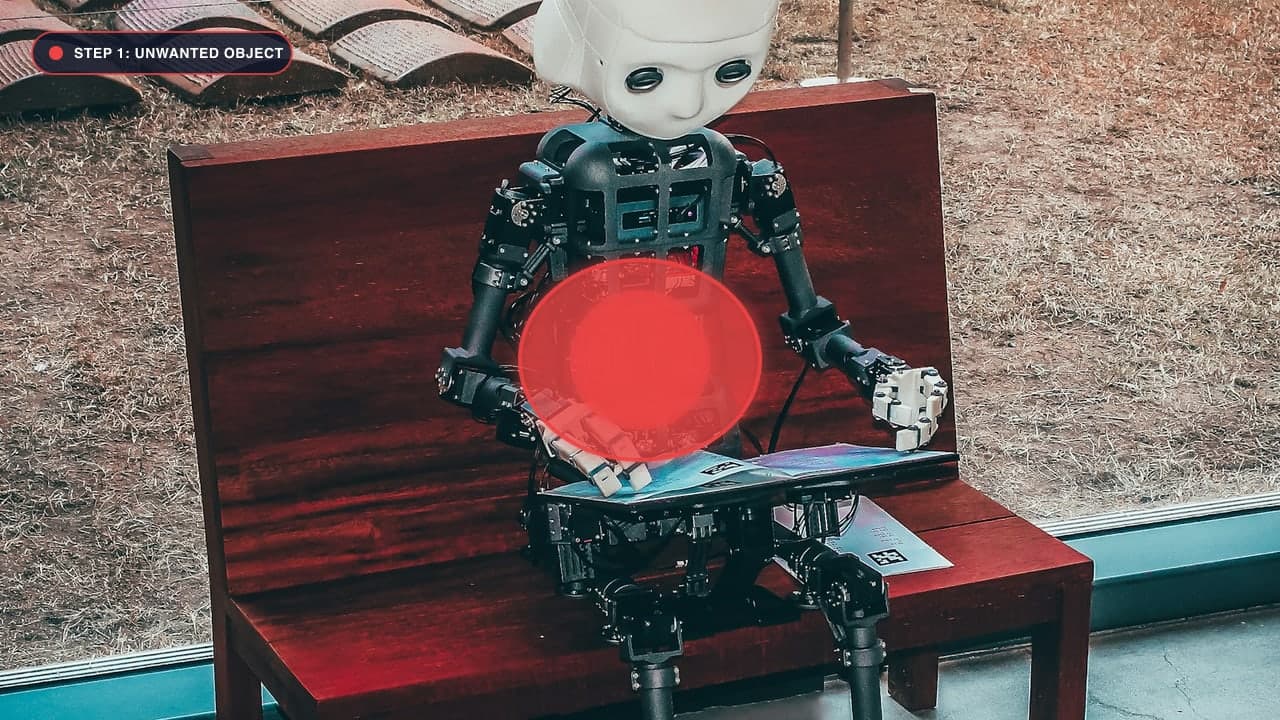
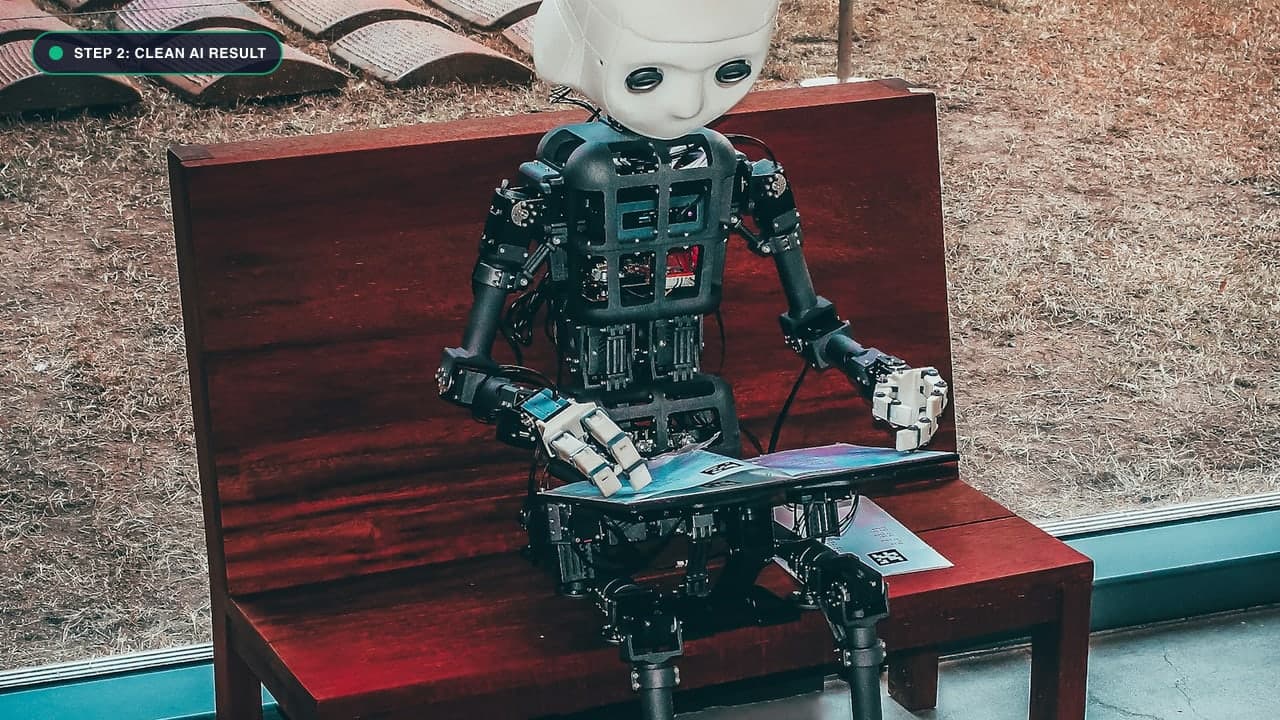
The Computational Revolution in Image Inpainting
Image inpainting—the algorithmic task of reconstructing missing or degraded regions of an image so that the modification is undetectable to human observers—is one of the cornerstone challenges of computer vision.
For decades, the state of the art relied on non-learning, patch-based texture synthesis algorithms like PatchMatch (Barnes et al., 2009). PatchMatch searched through the unmasked regions of an image to find pixel patches that closely resembled the boundary of the hole, copying and stitching them together. While PatchMatch worked reasonably well for simple repetitive textures like grass or sand, it failed catastrophically when attempting to understand structural semantics: it could not deduce that a severed roofline needed to continue across a void, or that a half-occluded brick wall required aligned mortar joints.
In this deep technical exploration, we examine how modern deep learning neural networks, specifically LaMa (Large Mask Inpainting) and Fast Fourier Convolutions, revolutionized object removal.
The Breakthrough: Fast Fourier Convolutions (FFC)
Standard Convolutional Neural Networks (CNNs) suffer from a fundamental architectural limitation: local receptive fields. A standard 3x3 convolution only aggregates information from neighboring pixels. To propagate context from the top-left of an image across a large 300-pixel mask to the bottom-right, standard CNNs require dozens of deep stacked layers, which causes high-frequency details to blur out.
The breakthrough came with Fast Fourier Convolutions (FFCs), introduced by Chi et al. (2020) and perfected for inpainting by Suvorov et al. (2021) in the LaMa architecture:
Input Image [B, C, H, W] ───► Split into Local & Global Branches
                                  │
  Local Branch: Standard Spatial Conv (Captures sharp local edges)
                                  │
  Global Branch: Real FFT2D ──► Complex Conv in Frequency Domain ──► Inverse FFT2D
                                  │
Recombined Feature Maps [B, C', H, W] (Possesses IMAGE-WIDE receptive field in layer 1!)
By converting spatial feature maps into the frequency domain via Real 2D Fast Fourier Transforms (RFFT2D), the neural network can capture global periodic patterns (such as brick rows, architectural lines, tile grout, and horizon levels) immediately in early layers. This is why LaMa can fill enormous masks spanning over 50% of an image without structural warping.
GANs vs. Diffusion Models for Object Inpainting
Today, AI inpainting leverages two primary model families:
| Dimension | Generative Adversarial Networks (GANs / LaMa) | Latent Diffusion Models (SD Inpainting) | | :--- | :--- | :--- | | Inference Latency | Instantaneous (50ms – 250ms single forward pass) | Slow (3s – 12s across 20-50 denoising steps) | | Hardware Requirement | Lightweight (Runs directly inside WebAssembly on CPU/GPU) | Heavy (Requires dedicated cloud GPU like Nvidia A10G) | | Texture Coherence | Reconstructs exact existing physical surfaces | Often hallucinates new, unexpected creative objects | | Data Privacy | Can execute 100% locally in browser memory | Usually requires uploading images to third-party cloud servers |
For pure object removal—where the goal is not to invent dragons or spaceships, but to seamlessly reveal the authentic background—LaMa and FFC-based GAN architectures are vastly superior, providing instantaneous results with zero privacy risk.
On-Device WebAssembly & Privacy Architecture
At ObjectRemover.in, our mission is to provide studio-grade editing without compromising user privacy. Most online AI tools act as mere wrappers around remote cloud APIs, requiring you to upload your sensitive personal snapshots, IDs, or family moments to unknown servers.
Our client-side pipeline compiles deep neural models directly into WebAssembly (WASM) and utilizes WebGL / WebGPU hardware acceleration:
- Your image is loaded directly into browser RAM.
- The mask canvas generates a binary alpha channel.
- Neural tensor computation executes locally on your device's GPU/CPU.
- The output is rendered back to your screen in real time.
- Your photos never touch external servers or databases.
For more technical details on our pipeline, read our How It Works Architecture Page.
एआई ऑब्जेक्ट रिमूवल तकनीक कैसे काम करती है? - हिंदी गाइड (Bilingual Hindi Section)
इनपेंटिंग का विज्ञान और तकनीक:
- फास्ट फूरियर कन्वेक्युशन (FFC): जब आप किसी फोटो से कोई चीज हटाते हैं, तो एआई आसपास के पिक्सल और पैटर्न (जैसे ईंटें, आसमान या फर्श) का गणितीय विश्लेषण करता है।
- प्राकृतिक बैकग्राउंड निर्माण: यह केवल आसपास के रंग को कॉपी नहीं करता, बल्कि पूरी तस्वीर के परिप्रेक्ष्य (Perspective) और रोशनी को समझकर नया बैकग्राउंड तैयार करता है।
- 100% प्राइवेट और सुरक्षित: आपकी फोटो किसी सर्वर पर अपलोड नहीं होती। सारा काम आपके कंप्यूटर या मोबाइल के ब्राउज़र में WebAssembly तकनीक द्वारा सुरक्षित रूप से होता है।
Frequently Asked Questions (FAQ)
What does "Inpainting" mean in computer vision?
Inpainting is the art and science of restoring missing or damaged parts of an image so the reconstructed area blends imperceptibly with the surrounding scene.
Why is ObjectRemover.in so fast compared to Midjourney or Stable Diffusion?
Stable Diffusion requires 30 to 50 iterative denoising steps. Our FFC-based architecture performs inpainting in a single ultra-fast forward inference pass.
Can I test this on my own photos right now?
Yes! Jump into our Magic Eraser Studio or test our specialized Remove People Tool.
Try It On Your Own Photo Right Now
अपनी फोटो से किसी भी अनचाहे ऑब्जेक्ट को हटाने के लिए नीचे दिया गया टूल आज़माएं:
Drop your photo here or browse
Supports JPG • PNG • WEBP • HEIC (Max 25MB, Native 4K)